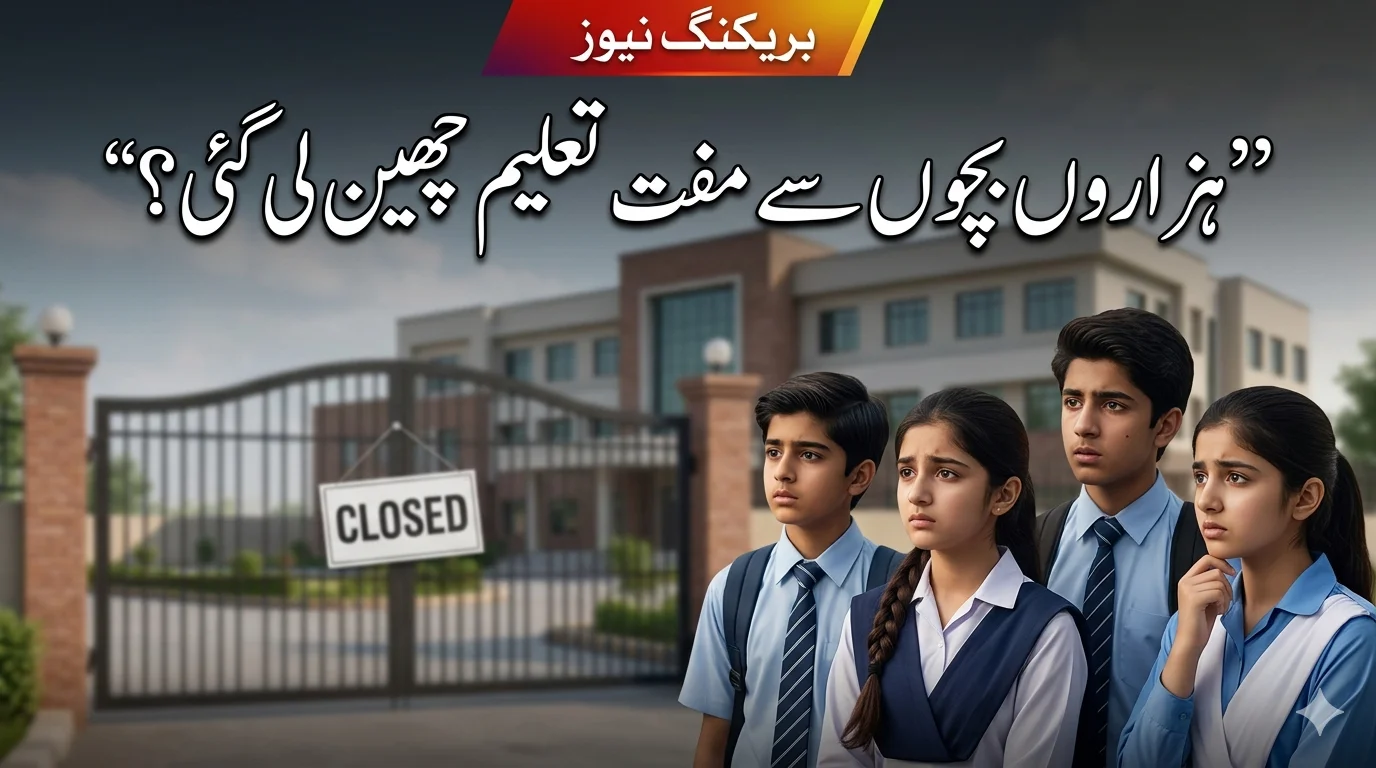
A serious issue has emerged in the private education sector of Islamabad, raising concerns about fairness, access, and accountability. Recent developments reveal that many private schools may not be following a legal requirement meant to provide free education to underprivileged students.
What the Law Requires
Under the Right to Free and Compulsory Education Act 2012, all private schools are required to allocate 10% of their seats for free education. This rule aims to ensure that children from low-income families can access quality education without financial barriers.
The Current Situation
According to data shared by the Private Educational Institutions Regulatory Authority (PEIRA) during a hearing at the Islamabad High Court:
-
Total registered private schools: 1,571
-
Total enrolled students: 389,000
-
Students eligible for free education (10% quota): 38,900
However, reports suggest that most schools are not complying with this mandatory quota.
Estimated Financial Impact
Authorities estimate that private schools may be withholding between Rs5 billion to Rs6 billion annually by not offering the required number of free seats. This raises serious questions about transparency and ethical practices in the sector.
Key Data Overview
| Category | Figures |
|---|---|
| Registered Private Schools | 1,571 |
| Total Students Enrolled | 389,000 |
| Required Free Education Seats | 38,900 |
| Estimated Withheld Amount | Rs5–6 Billion/year |
Court Proceedings and Sudden Withdrawal
The issue came into focus during a hearing led by Justice Raja Inaam Ameen Mihas at the Islamabad High Court. The case was filed to address concerns related to private school fees and compliance with education laws.
In a surprising turn, the petitioner withdrew the case, which has temporarily halted further legal proceedings. This move has raised concerns among legal experts, who believe it may allow non-compliant institutions to avoid proper investigation.
Government Response and Enforcement
PEIRA has taken some initial steps, including:
-
Issuing notices to private schools
-
Collecting compliance data
-
Forming a monitoring committee
-
Warning of strict legal action
Despite these efforts, many schools have yet to fully comply with the law.
Why This Matters
This issue goes beyond policy—it directly affects thousands of children who are legally entitled to free education but are currently being left out.
Experts believe that proper enforcement of the 10% quota could:
-
Increase access to quality education
-
Reduce inequality
-
Support government initiatives like “No Child Left Behind”
Challenges Ahead
While the law is clear, implementation remains weak. Key challenges include:
-
Lack of strict monitoring
-
Limited accountability mechanisms
-
Legal loopholes due to case withdrawals
The Way Forward
For meaningful change, experts suggest:
-
Stronger enforcement of existing laws
-
Transparent reporting by schools
-
Public awareness about student rights
-
Continued judicial oversight
Final Thoughts
The situation highlights a critical gap between policy and practice in Pakistan’s education system. Ensuring that private schools follow the law is essential not just for compliance, but for building a more inclusive and fair society.
If properly addressed, this issue could open doors for thousands of students who deserve equal opportunities to learn and succeed.