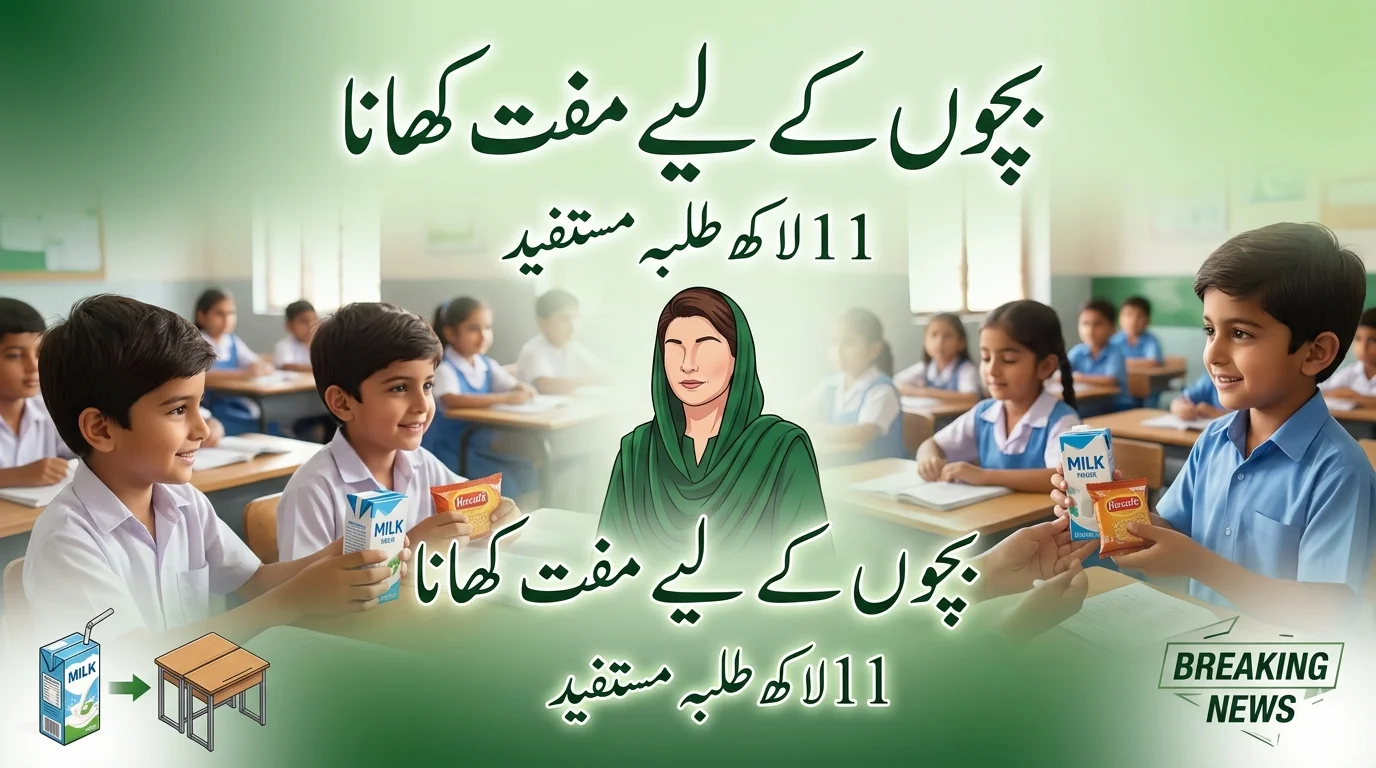
The future of any nation depends on the health and education of its children. In Punjab, a major initiative is reshaping both. The CM Punjab School Meal Program 2026 has officially reached over 1.1 million students, marking a significant milestone in public welfare and education reform.
Led by Maryam Nawaz, this program is built on a simple but powerful idea: no child should have to study while hungry. By ensuring daily nutrition in schools, the initiative is improving both learning outcomes and attendance rates across the province.
What is the CM Punjab School Meal Program?
The CM Punjab School Meal Program is a large-scale government initiative designed to provide healthy daily meals to primary school students. It primarily targets underprivileged and rural areas where access to balanced nutrition is limited.
Each school day, students receive nutritious food items directly in their classrooms. This approach not only supports physical health but also enhances focus, energy levels, and classroom participation.
Key Components: Milk and Fortified Biscuits
The program focuses on two scientifically backed food items essential for child development:
- Fortified Milk:
Each child receives UHT-treated milk enriched with Vitamin A and D. These nutrients are essential for strong bones, better immunity, and improved eyesight. - High-Energy Biscuits:
The biscuits are fortified with iron and essential minerals. They help prevent anemia and support brain development, improving memory and cognitive performance.
Massive Reach: Over 1.1 Million Students in 2026
The 2026 expansion has made this one of the largest school feeding programs in South Asia. Currently, it covers 13 districts, mainly in South Punjab, where poverty and malnutrition rates are higher.
Districts included:
- Dera Ghazi Khan
- Rajanpur
- Muzaffargarh
- Layyah
- Bhakkar
- Mianwali
- Kot Addu
- Jhang
- Chiniot
- Khushab
- Lodhran
- Vehari
- Khanewal
By targeting these regions, the government ensures resources reach the children who need them the most.
A Unique “Green” Initiative: Recycling for Education
One of the most innovative aspects of the program is its environmental impact. Instead of discarding used milk packs, schools collect them for recycling.
How it works:
- Empty cartons are gathered from schools
- Sent to recycling facilities
- Converted into desks, benches, and pencils
This initiative not only reduces waste but also teaches students environmental responsibility. It is a practical example of sustainable education in action.
Why Nutrition Matters for Learning
Scientific research shows that proper nutrition plays a crucial role in a child’s brain development. The school meal program directly supports this by addressing common deficiencies.
Benefits include:
- Better concentration in class
- Improved memory and learning ability
- Increased school attendance
- Stronger physical growth and immunity
Children who eat well are more active, attentive, and ready to learn.
Positive Impact on Enrollment and Attendance
Since the program’s expansion in 2026, schools have reported noticeable improvements:
- Increased student enrollment in rural areas
- Higher daily attendance rates
- More active classroom participation
For many families, this program provides relief by ensuring their children receive at least one nutritious meal daily.
Role of the School Education Department
The School Education Department Punjab manages the program’s operations. Their responsibilities include:
- Ensuring safe storage and distribution of food
- Conducting quality checks
- Training teachers for proper implementation
Strict monitoring ensures that students receive safe and high-quality nutrition every day.
How Parents Can Share Feedback
Transparency is a key part of the program. Parents can report concerns or provide suggestions through:
- Official government helplines
- The “Maryam Ko Batain” online portal
This feedback system helps maintain accountability and continuous improvement.
Future Vision: Expansion Across Punjab
Currently benefiting 1.1 million students, the long-term goal is to expand the program to all primary schools in Punjab.
As resources grow and the recycling model strengthens, more districts will be included. This initiative is just the beginning of a broader plan to improve child health and education nationwide.
Final Thoughts
The CM Punjab School Meal Program 2026 is more than just a feeding initiative. It is a long-term investment in human development. By addressing hunger, improving education, and promoting sustainability, the program is shaping a healthier and more educated generation.
This effort reflects a strong commitment to building a better future for Pakistan—one child at a time.
FAQs
1. Who can benefit from this program?
Students enrolled in government primary schools in the selected 13 districts are eligible.
2. What food is provided daily?
Each child receives fortified milk (200ml) and a packet of nutrient-rich biscuits.
3. Do parents need to pay for the meals?
No, the program is completely free and funded by the Punjab government.
4. What happens to empty milk packs?
They are collected and recycled into school furniture and educational materials.
5. How can complaints or feedback be submitted?
Parents can use official helplines or the “/punjab.gov.pk/citizen-corner” portal to report issues.